
The volume of rain experienced in the D.C. Metro area in the past month is nothing short of historical, with some locations in Maryland experiencing the wettest days on record. The Potomac flowed onto sidewalks, flooding parts of Old Town Alexandria during a high tide that was up to five feet above normal. The rental dock under Key Bridge was flooded, as were bike paths in Alexandria, Arlington and the District. More than one client texted videos or pictures of water standing in a crawl space or running down basement walls through windows. Friends living on the Potomac reconfirmed their flood insurance.
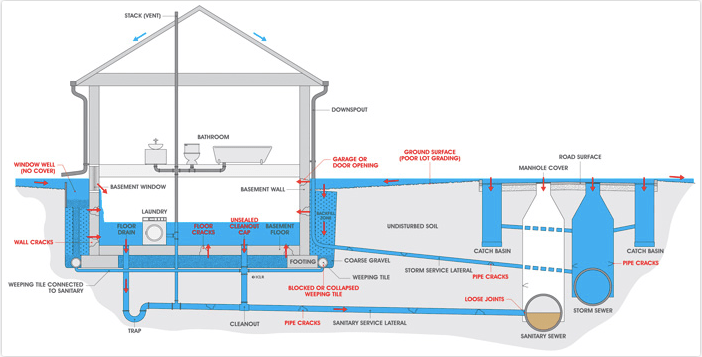
Basement flooding does happen for reasons other than significant precipitation, to include seepage or flow through the walls or foundation floor, surface water sources or by a sanitary or storm sewer backup. Poor lot grading, an unmaintained foundation and problems with pipes may contribute to flooding.
Aside from just the issue of standing water, there is the potential for mold and damage to personal belongings. Cleaning up is clearly important and expensive, but preventing future incidents is critical. A wet basement is unusable, flooded foundations become weakened over time and toxic mold can be present.
Frequently, the root cause of flooding can be traced to drainage conditions around the outside of the basement. As a result, improving the drainage conditions is the waterproofing solution. A licensed, experienced and reputable contractor should be consulted to identify the best course of action for the conditions specific to the affected home.
Scale of damage and location of the home will impact clean-up costs, which can be substantial. The basic cost of pumping water out of a basement and drying the space can start at as little as $500, but can quickly escalate into the thousands of dollars depending on the extent of damage. A major contributing factor is the type of water. Category 1 is clean water, such as a burst pipe; Category 2 is gray water, which is water with minor contaminants such as an overflowing dishwasher or washing machine; and Category 3 is black water, which is water with sewage or other toxic debris such as flood waters.
If your basement floods, the first step is to shut off any power to include electricity and gas. A wet basement carries risk of electrical shock. If the cause is a burst pipe, shut off the water to the basement. If the basement has a floor drain check to ensure it isn’t clogged and is draining the water. Start removing water from the basement as quickly as possible using a sump pump, pool pump, wet/dry vacuum or mop and bucket. Move damaged items to an alternate location to dry, preferably outdoors in the sunshine to best avoid mold and mildew. After you have taken as much corrective action as possible, call your insurance company and begin the process of repair.
Header image sourced from Utilities Kingston.
 Lisa Coutts, Realtor
Leave a comment